Philadelphia and Pennsylvania:
250 Years of Building America

From the Revolutionary Era to Advanced Manufacturing, a Timeline of Innovation, Industry, and American Progress

For 250 years, Philadelphia and Pennsylvania have stood at the center of America’s industrial story.

Long before the nation became a manufacturing powerhouse, Philadelphia was already proving that innovation, production, and ingenuity could change the course of history. From the workshops that supported the American Revolution to the shipyards, steel mills, railroads, factories, laboratories, and advanced manufacturers that followed, Pennsylvania helped build the economic and industrial foundation of the United States.

When America needed freedom, mobility, infrastructure, energy, military strength, or technological advancement, it repeatedly turned to Pennsylvania’s industrial base.

In the 20th century, Philadelphia manufacturers supported wartime efforts and strengthened America’s global industrial position. Today, the region continues this legacy through advanced manufacturing, biotechnology, and robotics, demonstrating how Philadelphia’s ability to adapt and innovate has remained a driving force in American industry.

1770s–1790s: Manufacturing the Revolution

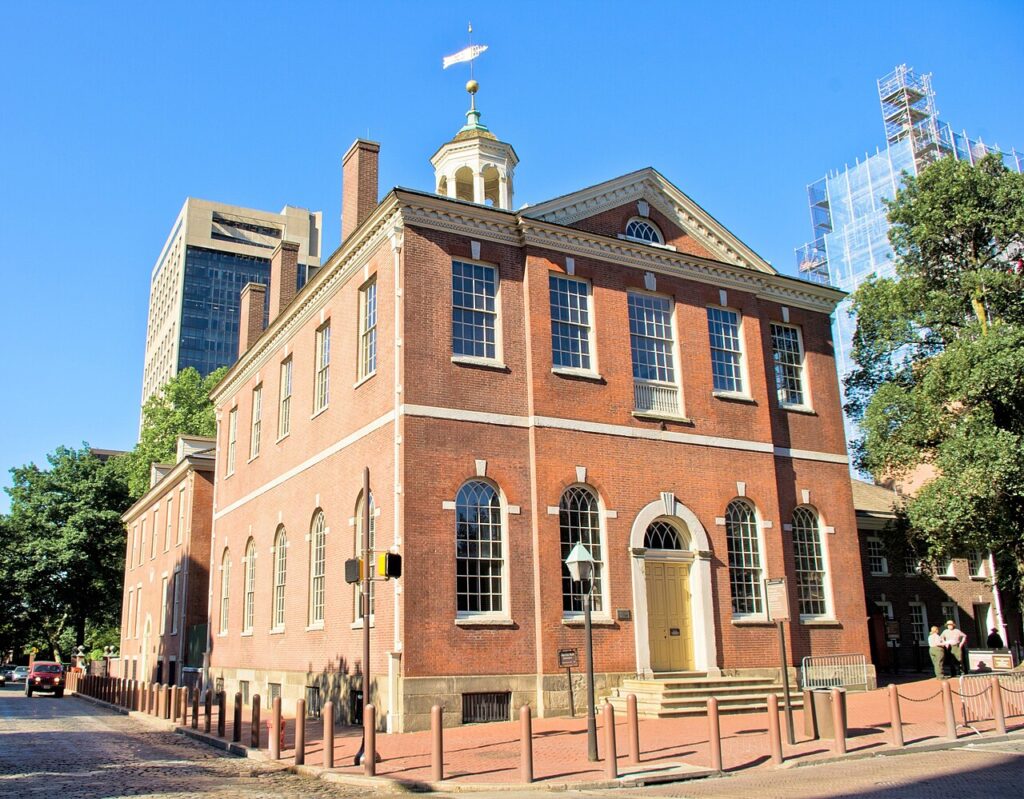
Philadelphia did more than host the birth of American democracy. It helped manufacture it.

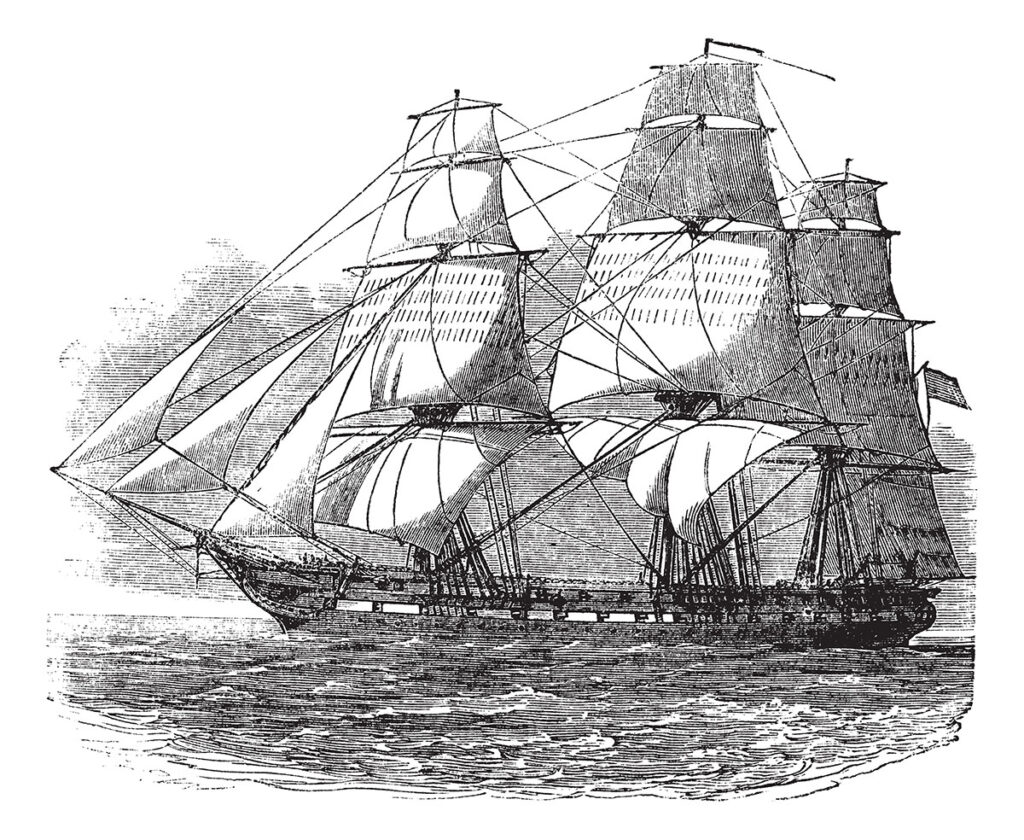
During the Revolutionary era, the city was home to shipbuilders, foundries, printers, instrument makers, ropewalks, mills, and skilled artisans. Together, they supplied the materials, equipment, and expertise needed to support the fight for independence.

The industrial networks that developed during this period established Philadelphia as one of the nation’s earliest centers of manufacturing and innovation.

Philadelphia did not just write the Declaration of Independence. It helped manufacture the Revolution.

Source: Stock photo

By Sdwelch1031 – Own work, CC BY 3.0, https://commons.wikimedia.org/w/index.php?curid=11858883

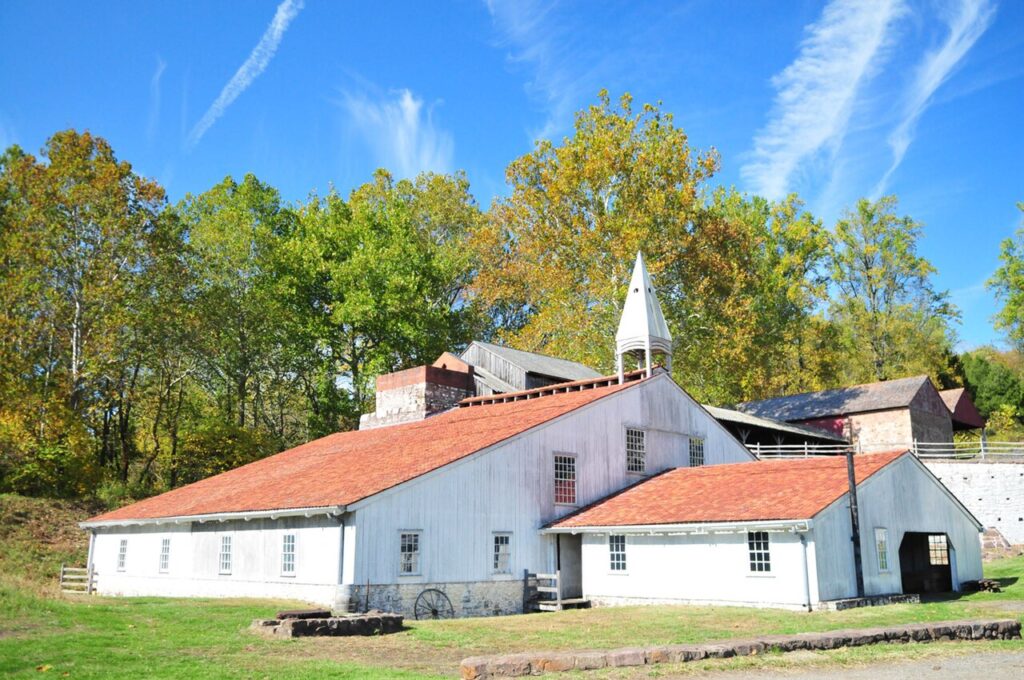
1771–1830s: Southeastern Pennsylvania Becomes an Iron Powerhouse

Long before Pittsburgh became synonymous with steel, southeastern Pennsylvania was one of America’s leading iron-producing regions.

Communities built around furnaces, mines, forests, waterways, and transportation networks formed some of the nation’s earliest industrial supply chains. Sites such as Hopewell Furnace demonstrated how raw materials, skilled labor, and logistics combined to create a foundation for industrial growth.

These early iron operations helped establish Pennsylvania as a manufacturing leader long before the Industrial Revolution reached full scale.

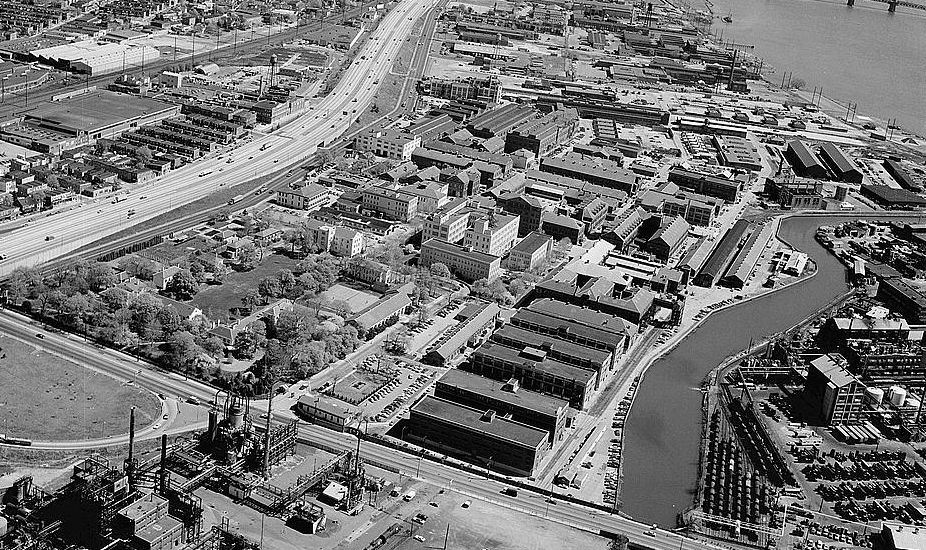
1816–1977: Frankford Arsenal and the Rise of Defense Manufacturing

The opening of Frankford Arsenal in 1816 transformed Philadelphia into a center for military manufacturing, engineering, and innovation.

For more than 160 years, the Arsenal supported the nation’s defense through ammunition production, testing, optics, radar systems, fire-control technologies, and advanced military research. During both World Wars, the facility became a critical asset in supporting American military readiness.

At its peak during World War II, Frankford Arsenal employed approximately 22,000 workers and dramatically expanded production to meet wartime demand.

It was more than a factory. It was a military innovation campus before that term existed.

Joseph Elliott, photographer – (Original text: Historic American Buildings Survey) HAER PA,51-PHILA,693-2

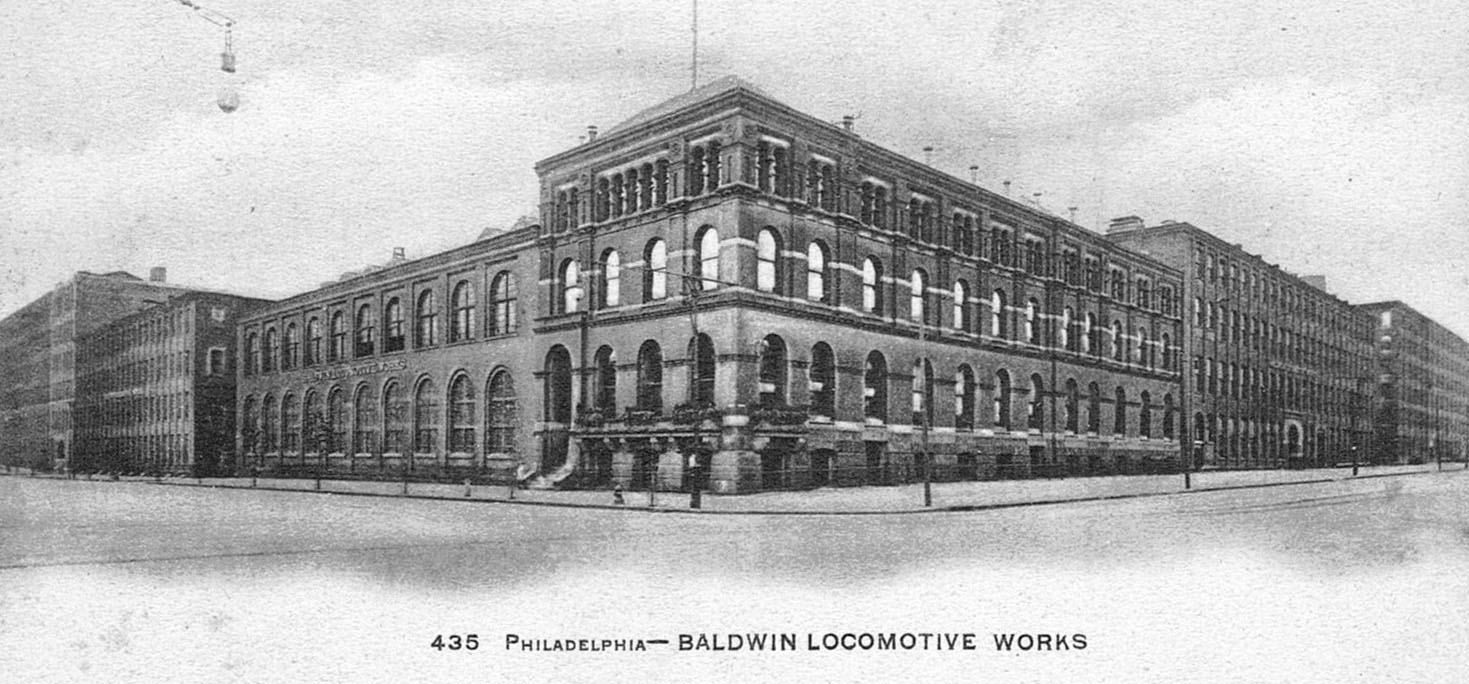
1820s–1950s: Baldwin Locomotive Works Helps Move a Nation

Few companies had a greater impact on American transportation than Baldwin Locomotive Works.

Founded in Philadelphia, Baldwin grew into one of the largest locomotive manufacturers in the world. Its engines connected cities, moved goods, expanded commerce, and helped fuel westward expansion.

By the late 19th century, Baldwin was producing hundreds of locomotives each year and employing thousands of workers.

If railroads stitched America together, Philadelphia helped build the needle.

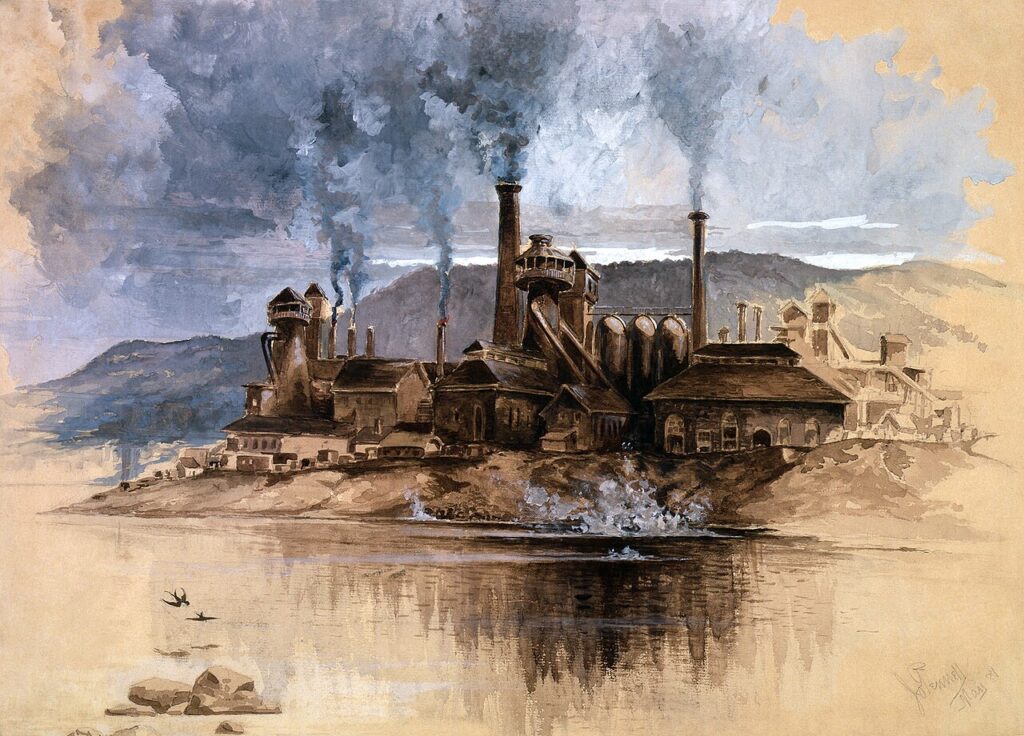
1840s–1890s: Railroads, Coal, Iron, and Steel Build Industrial America

Pennsylvania’s industrial rise was powered by an interconnected system.

Coal fueled the furnaces. Furnaces produced iron and steel. Railroads moved both materials and finished products across the nation. Together, these industries created one of the most powerful industrial engines in American history.

Pennsylvania became the industrial flywheel that accelerated national growth and transformed the United States into a manufacturing powerhouse.

By Joseph Pennell – United States Library of Congress’s Prints and Photographs division.

By Unknown – HD.11B.154, ENERGY.GOV, Public Domain

1859: Pennsylvania Launches the Petroleum Age

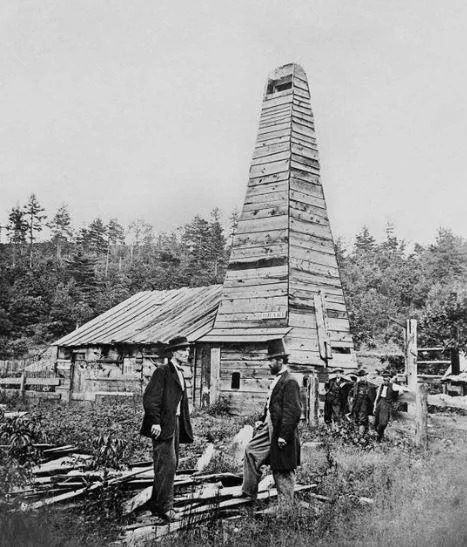
In 1859, Edwin Drake successfully drilled what is widely recognized as the nation’s first commercial oil well near Titusville, Pennsylvania.

The discovery launched the American petroleum industry and opened an entirely new chapter in energy production, transportation, manufacturing, and economic development.

Pennsylvania did not just fuel the Industrial Revolution with coal. It helped launch the oil age as well.

Late 1800s–Early 1900s: Philadelphia Becomes the Workshop of the World

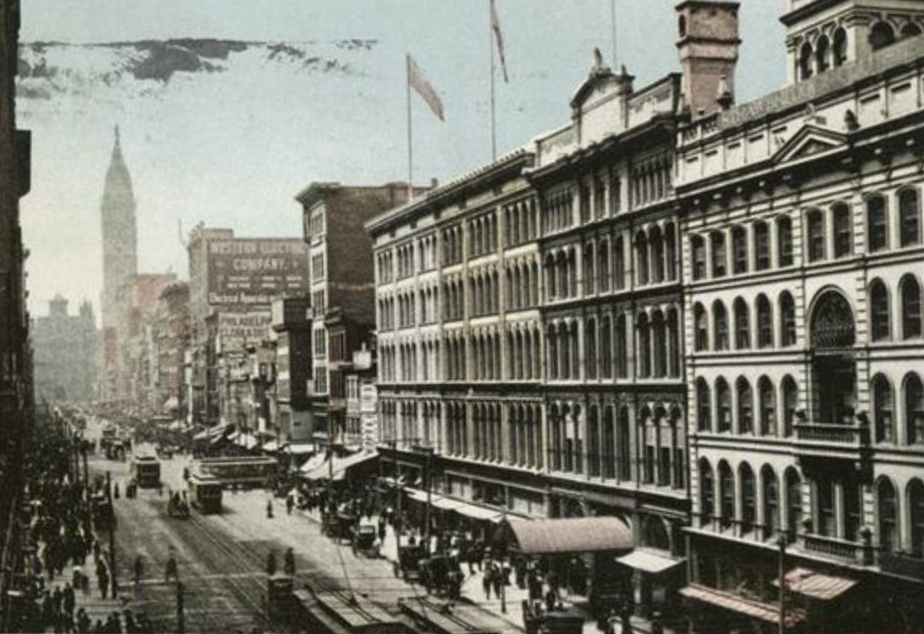
By the turn of the century, Philadelphia had earned the title “Workshop of the World.”

The city’s manufacturing strength came from its remarkable diversity. Thousands of businesses produced textiles, garments, machinery, chemicals, pharmaceuticals, ships, tools, printing equipment, medical instruments, and countless other products.

Unlike many industrial centers built around a single industry, Philadelphia thrived because of its ecosystem of manufacturers, suppliers, skilled tradespeople, engineers, and entrepreneurs.

Manufacturing was woven into the fabric of the city.

By Antoine Taveneaux – Own work, CC BY-SA 3.0

Source: New York Public Library

1870s–1940s: Pennsylvania Builds Modern America

While Philadelphia became the Workshop of the World, other parts of Pennsylvania helped build the nation’s infrastructure.

Pittsburgh emerged as a global center for steel production. Bethlehem Steel became one of the most important industrial companies in the world. Together, Pennsylvania manufacturers produced the steel used in railroads, bridges, skyscrapers, ships, military equipment, and public infrastructure.

If Philadelphia was the workshop, Pittsburgh and Bethlehem were the forge.

1914–1945: Manufacturing Powers Victory

The First and Second World Wars demonstrated the importance of industrial capacity.

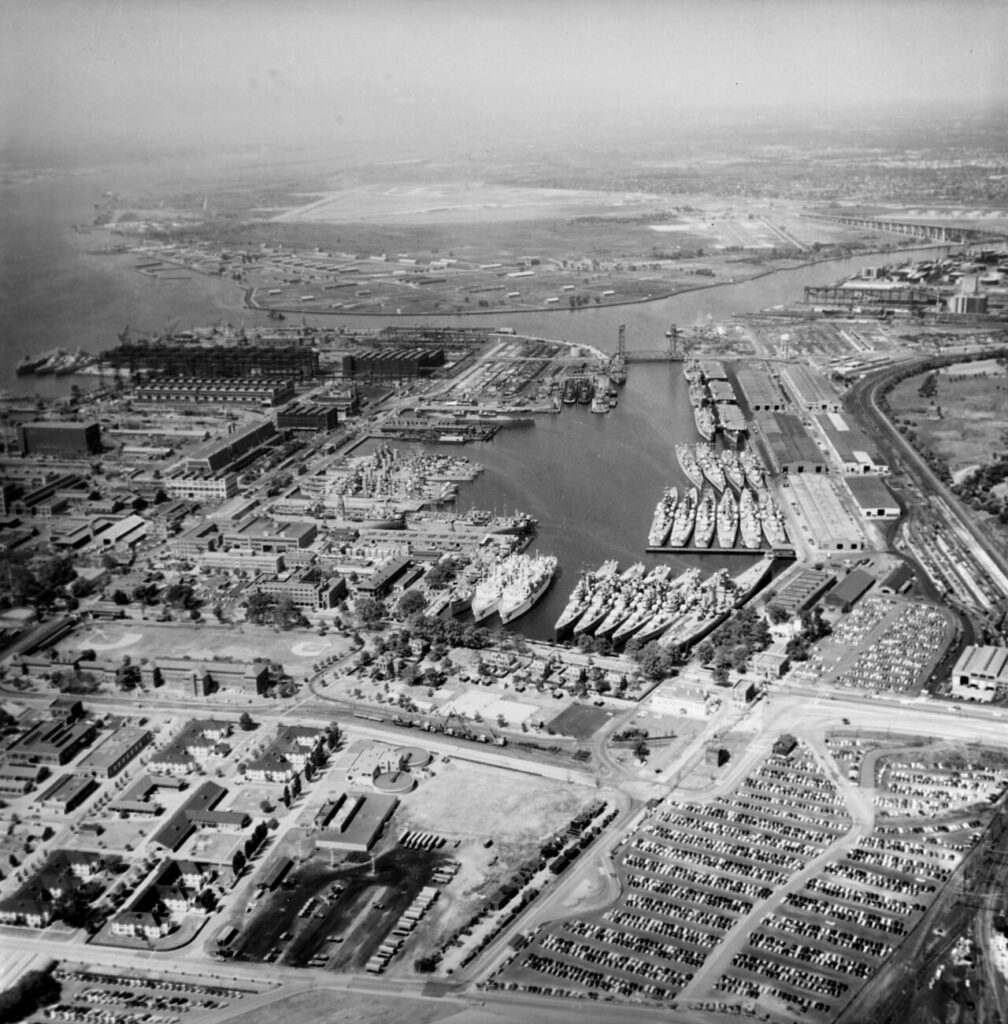
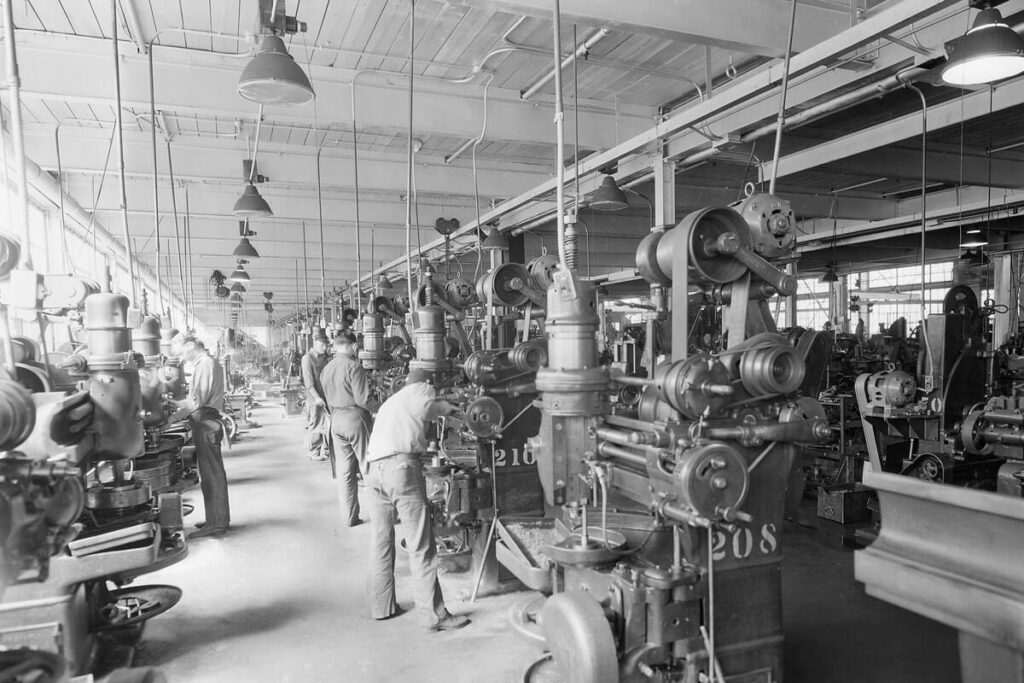
Pennsylvania’s manufacturers supplied steel, ships, locomotives, ammunition, military systems, and countless products needed to support the war effort. Facilities such as Frankford Arsenal, Bethlehem Steel, Baldwin Locomotive Works, and the Philadelphia Navy Yard became strategic national assets.

The Philadelphia Navy Yard alone employed approximately 40,000 workers during World War II.

The lesson remains relevant today.

Industrial capacity is national security.

By Unknown author – U.S. Navy photo 80-G-668655, Public Domain.

Source: Philadelphia Gear, A Brand of The Timken Company.

1950s–1980s: Industrial Transformation and Economic Change

Following decades of growth, manufacturing entered a period of transformation.

Automation, globalization, suburbanization, and changing economic conditions reshaped the industrial landscape. Philadelphia and Pennsylvania lost significant manufacturing employment, and many iconic facilities closed or downsized.

Yet the region retained its engineering expertise, transportation infrastructure, technical workforce, research institutions, and manufacturing knowledge.

The capabilities remained even as industries evolved.

2000s–Today: Pennsylvania Remains a Manufacturing Leader

Despite decades of change, Pennsylvania remains one of America’s leading manufacturing states.

The Commonwealth’s industrial base spans food production, chemicals, machinery, fabricated metals, electronics, plastics, transportation equipment, life sciences, defense technologies, and advanced manufacturing.

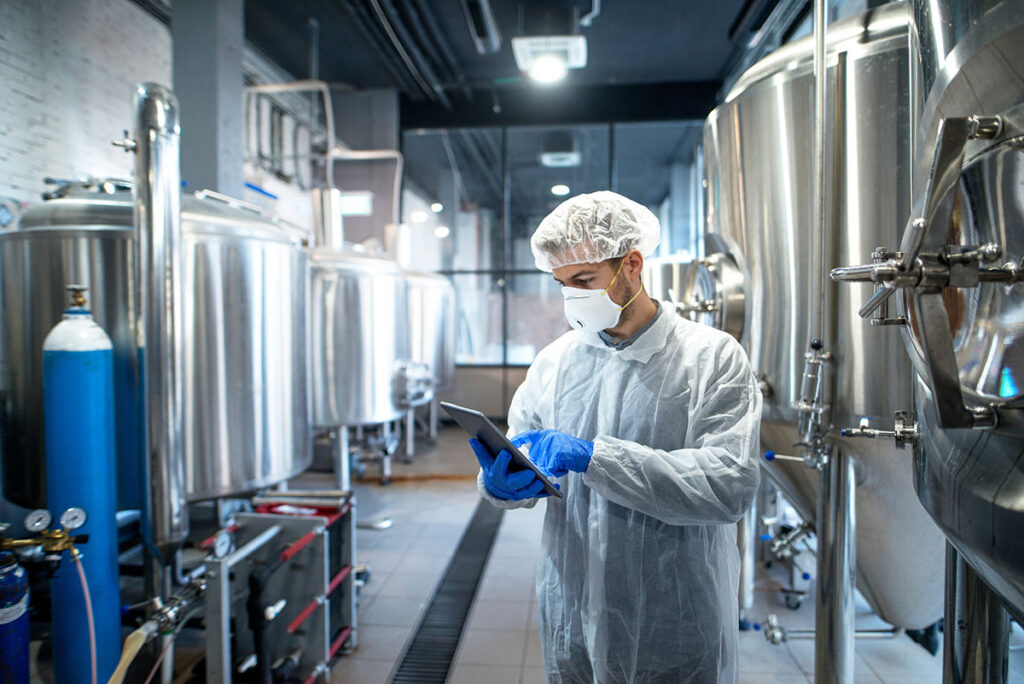
Today, manufacturing contributes more than $100 billion annually to Pennsylvania’s economy and supports more than half a million jobs.

Pennsylvania is not a former manufacturing state.

It is a manufacturing state with a memory problem and a tremendous opportunity.

Source: Stock photo

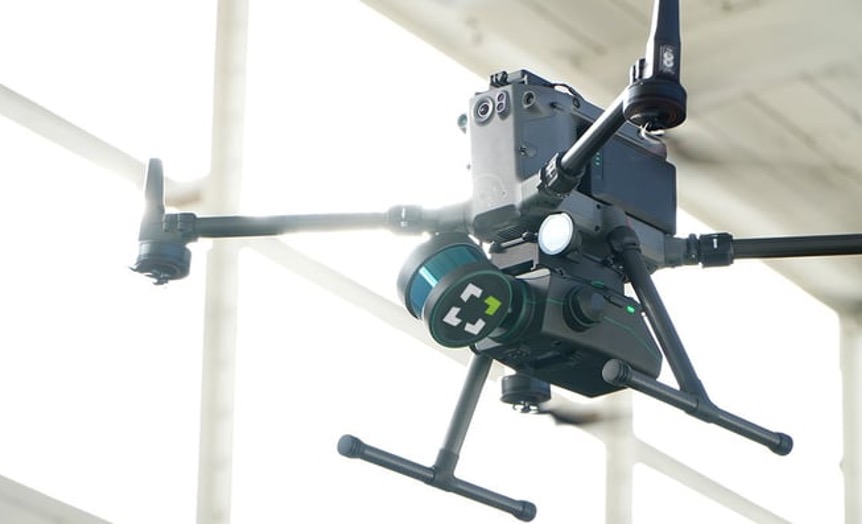
Courtesy of Exyn Technologies.

Courtesy of Exyn Technologies.

2020s and Beyond: Building the Next Industrial Revolution

The future of manufacturing will not look like the past.

It will be defined by shipyard modernization, life sciences, semiconductors, robotics, artificial intelligence, cybersecurity, advanced materials, energy technologies, and resilient supply chains.

Philadelphia’s Navy Yard is once again attracting attention as a strategic industrial asset. Pennsylvania continues to benefit from investments in semiconductor supply chains, advanced manufacturing, life sciences production, and next-generation technologies.

The next industrial revolution is already underway.

The Next 250 Years: America’s Manufacturing Future

For 250 years, Philadelphia and Pennsylvania have been at the center of America’s industrial story. Philadelphia helped manufacture the Revolution, built the early Navy, powered the locomotive age, and became the Workshop of the World. Pennsylvania scaled coal, iron, steel, oil, railroads, shipbuilding, chemicals, medicine, and defense production into the backbone of American power.

The lesson is clear. When America needed freedom, mobility, infrastructure, victory, energy, or security, it repeatedly turned to Pennsylvania’s industrial base. The factories, shipyards, laboratories, railroads, and workshops of the Commonwealth helped build a nation and support its rise as a global leader.

Today, the challenges look different, but the need for industrial strength remains the same. Global competition is intensifying. Supply chains are under pressure. The nation faces growing demands in energy, defense, healthcare, technology, and transportation. Meeting those challenges will require innovation, production capacity, skilled workers, and the ability to build critical products here at home.

Pennsylvania is uniquely positioned to help lead this next chapter. The Commonwealth’s manufacturers, research institutions, ports, industrial infrastructure, and skilled workforce provide a foundation for growth in advanced manufacturing, life sciences, shipbuilding, robotics, artificial intelligence, energy systems, semiconductors, and defense technologies.

The future will not be built by recreating the industries of the past. It will be built by applying the same spirit of innovation, ingenuity, and determination that powered the last 250 years. The technologies may change. The mission remains the same.

Build. Innovate. Lead.

The next chapter of American manufacturing is already being written, and Pennsylvania has an opportunity to help lead it once again.

Selected Sources